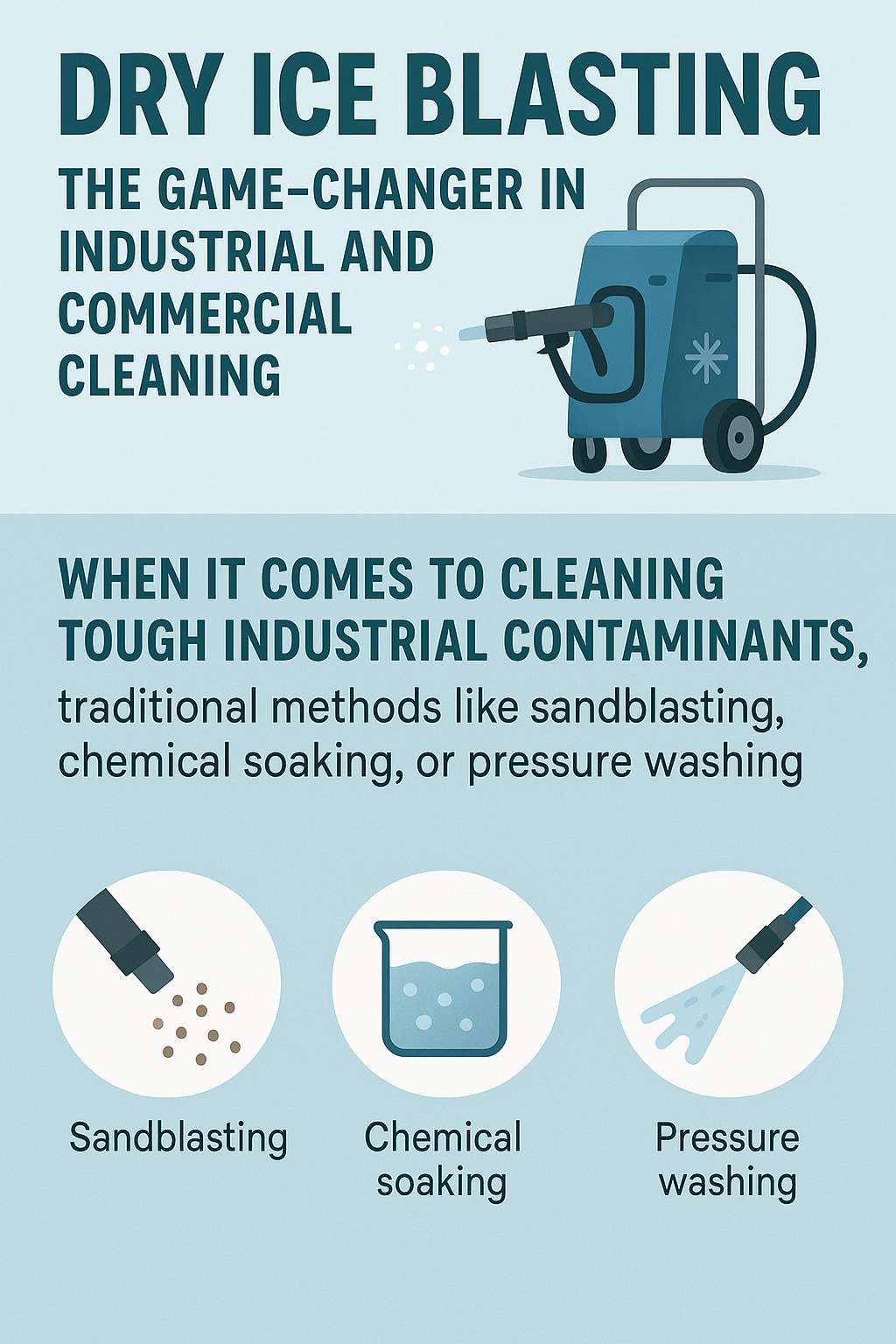
Dry Ice Blasting: The Game-Changer in Industrial and Commercial Cleaning
When it comes to cleaning tough industrial contaminants, traditional methods like sandblasting, chemical soaking, or pressure washing often fall short. They’re messy, abrasive, and can sometimes cause more harm than good—especially to delicate machinery or sensitive surfaces. That’s where dry ice blasting stands out as a revolutionary cleaning technology.Used across a wide range of industries, dry ice blasting is fast becoming the go-to solution for professionals who want a powerful, non-damaging, and environmentally responsible way to clean equipment, surfaces, and structures.
What Is Dry Ice Blasting?
Dry ice blasting is a cleaning method that uses compressed air to accelerate dry ice pellets (solid carbon dioxide) at high speeds to impact a surface. When the dry ice hits the surface:
- It freezes and fractures the dirt or contaminant
- It sublimates (turns directly from solid to gas), lifting the debris
- It leaves no water or chemical residue behind
This process is completely dry, non-toxic, and safe for both people and sensitive equipment.
Where Is Dry Ice Blasting Used?
Dry ice blasting is incredibly versatile and is now used across commercial, industrial, and even restoration industries. Some of the most common use cases include:
✅ Industrial Cleaning
- Removing grease, grime, oil, and dust from manufacturing equipment
- Cleaning hydraulic systems, conveyor belts, motors, and production lines
- Prepping surfaces for inspection or maintenance
✅ Food & Beverage Facilities
- Sanitation of ovens, mixers, slicers, and conveyors
- USDA-approved method with no water or chemical contamination
✅ Electrical & Power Plants
- Non-conductive cleaning of circuit boards, panels, and generators
- Effective for cleaning delicate electronics without damage
✅ Fire & Mold Restoration
- Removes soot, smoke damage, mold, and mildew from wood, brick, and concrete
- Ideal for restoring fire- or water-damaged structures
✅ Historic & Monumental Restoration
- Gently strips grime, old paint, and pollution from stone and brick
- Preserves architectural integrity
Benefits of Dry Ice Blasting
So, what makes dry ice blasting a superior choice over traditional cleaning methods like pressure washing or sandblasting?
1. No Secondary Waste
The dry ice sublimates into gas—leaving behind only the removed debris. No water, no slurry, no leftover abrasives.
2. Non-Abrasive & Non-Destructive
Unlike sandblasting, it won’t scratch surfaces, damage coatings, or wear down machinery.
3. Dry and Non-Conductive
Perfect for electrical and sensitive components where moisture or abrasion would be risky.
4. Eco-Friendly
No hazardous chemicals or solvents used. Dry ice is made from recycled CO₂, reducing environmental impact.
5. Time-Saving
Equipment can often be cleaned in-place, eliminating the need for disassembly and reducing downtime.
6. Improves Worker Safety
No harmful fumes or irritants. It’s safer for technicians and nearby staff compared to chemical cleaners.
Dry Ice Blasting vs Other Cleaning Methods
As you can see, dry ice blasting stands out in nearly every category—especially when precision, speed, and surface protection matter.
How Does the Dry Ice Blasting Process Work?
- Site Evaluation
A technician inspects the surface or equipment and determines the right blasting pressure and pellet size. - Setup
The dry ice blasting machine is connected to a compressor and loaded with dry ice pellets. - Blasting
Technicians carefully clean surfaces using targeted streams of CO₂ pellets. The debris falls away while the dry ice sublimates. - Cleanup (if needed)
Since no residue is left by the dry ice, only the removed debris needs to be collected—much less waste than other methods.
How Often Should Dry Ice Blasting Be Used?The frequency depends on the industry and application. Here are a few common recommendations:
- Manufacturing equipment: Every 2–3 months
- Food processing lines: Monthly or bi-weekly
- Electrical equipment: Quarterly or based on inspections
- Post-fire cleanup: As needed during restoration
- Restoration projects: Project-based or site-specific
Is Dry Ice Blasting Available in My Area?
Dry ice blasting services are now widely available in major cities and industrial zones. Whether you’re in Toronto, Chicago, Vancouver, Houston, or anywhere else with a large commercial base, chances are you can find a local dry ice blasting company ready to help.Be sure to look for a provider that offers:
- Free on-site assessments
- Trained and certified technicians
- Proper insurance and safety compliance
- Industry-specific experience
Final Thoughts: Why Dry Ice Blasting Is the Smart Choice
As industries evolve and the demand for safe, sustainable cleaning solutions increases, dry ice blasting is setting a new standard. It’s faster, safer, cleaner, and greener than most alternatives. Whether you need routine equipment maintenance, sensitive electronic cleaning, or post-disaster cleanup, dry ice blasting delivers professional results—without the damage or downtime.