Commercial Cleaning for Restaurants: Best Practices Every Owner Should Know
Running a successful restaurant isn’t just about delicious food and excellent service—it’s also about maintaining a clean, safe, and welcoming environment for your guests. Commercial cleaning for restaurants is a vital part of daily operations that directly affects customer satisfaction, health inspections, and your restaurant’s overall reputation.In this article, we’ll cover the best practices every restaurant owner should know to keep their establishment spotless and compliant.
Why Commercial Cleaning Is Essential for Restaurants
Restaurants are high-traffic spaces where food, beverages, and people come together. This makes them vulnerable to spills, grease buildup, and bacterial contamination. Proper commercial cleaning not only improves appearance but also ensures:
- Health & Safety Compliance – Meeting food safety regulations and passing health inspections.
- Customer Satisfaction – Guests are more likely to return to a clean and hygienic restaurant.
- Workplace Safety – Preventing slips, trips, and falls in kitchens and dining areas.
- Asset Longevity – Extending the life of furniture, flooring, and kitchen equipment.
Best Practices for Commercial Cleaning in Restaurants
1. Develop a Cleaning Schedule
Consistency is key. Divide cleaning tasks into daily, weekly, and monthly checklists:
- Daily: Wipe tables, sanitize countertops, sweep/mop floors, and clean restrooms.
- Weekly: Deep-clean kitchen equipment, polish floors, and disinfect high-touch areas.
- Monthly: Service HVAC systems, steam-clean carpets, and wash walls or ceilings.
2. Focus on High-Traffic Areas
Dining areas, restrooms, and entryways are where customers form their first impressions. These areas must be cleaned multiple times throughout the day.
3. Prioritize Kitchen Hygiene
The kitchen is the heart of a restaurant—and also the most challenging to keep clean. Best practices include:
- Degreasing stoves, ovens, and hoods.
- Sanitizing prep surfaces after every use.
- Cleaning sinks, drains, and refrigerators to prevent odors and bacteria buildup.
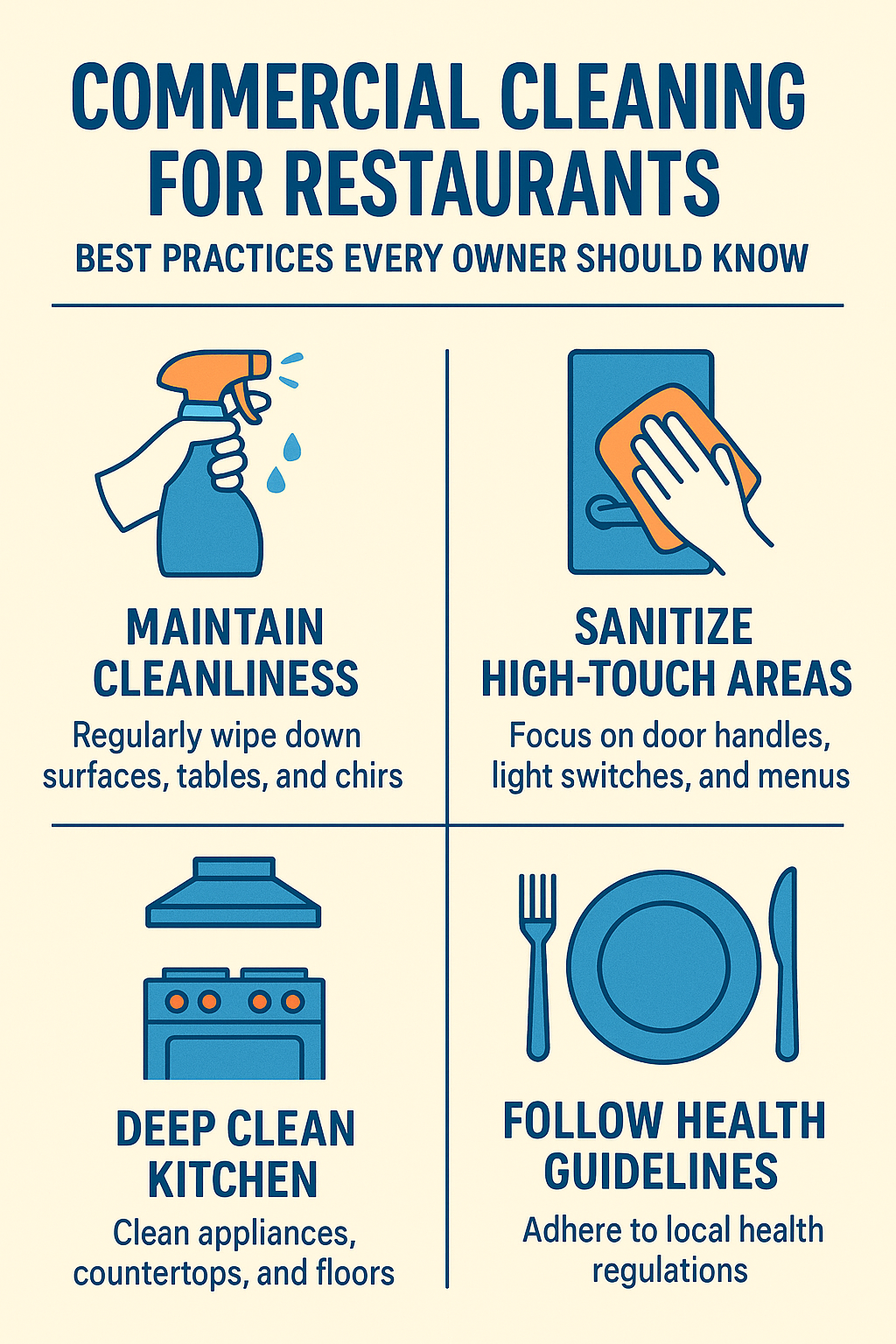
4. Train Your Staff
Even with a professional cleaning team, your restaurant staff plays a critical role in maintaining hygiene. Train them on proper sanitization practices, waste disposal, and immediate spill cleanup.
5. Use Eco-Friendly Products
Switching to eco-friendly commercial cleaning solutions helps reduce harmful chemical exposure while maintaining a safe dining environment for staff and guests.
6. Hire Professional Commercial Cleaners
While daily cleaning is handled by staff, deep cleaning is best left to professionals. Commercial cleaning companies have the right equipment, techniques, and experience to ensure every corner of your restaurant is spotless.
Common Areas That Need Special Attention
- Floors: Regular sweeping, mopping, and polishing to prevent slips and keep a clean look.
- Restrooms: Frequent sanitization of sinks, toilets, and door handles.
- Windows & Glass Doors: Smudge-free cleaning to improve appearance.
- Tables & Chairs: Wiped and disinfected after each customer.
- Storage Areas: Organized, clean, and pest-free to protect inventory.
Final Thoughts
Cleanliness is more than a requirement—it’s part of your restaurant’s brand. By following these best practices in commercial cleaning restaurants, you can protect your customers, staff, and reputation.For restaurant owners, partnering with a professional commercial cleaning service ensures deep cleaning, compliance with health regulations, and peace of mind. After all, a spotless restaurant doesn’t just attract diners—it keeps them coming back.
If you liked this blog, we encourage you to click and explore our other blog as well
https://mcagroup.ca/how-often-should-you-clean-office-carpets-by-footfall/